A ship is a working system where machinery, cargo plant and automation all act on each other. Knowing how they work on paper is the start. Knowing what happens when you open a valve or lose a compressor mid-transfer is what keeps a vessel safe, and that is the gap maritime simulation training closes.
Maritime simulation training uses software models and realistic control screens to recreate a ship’s working environment, or one of its systems, for training and assessment. The most common types are:
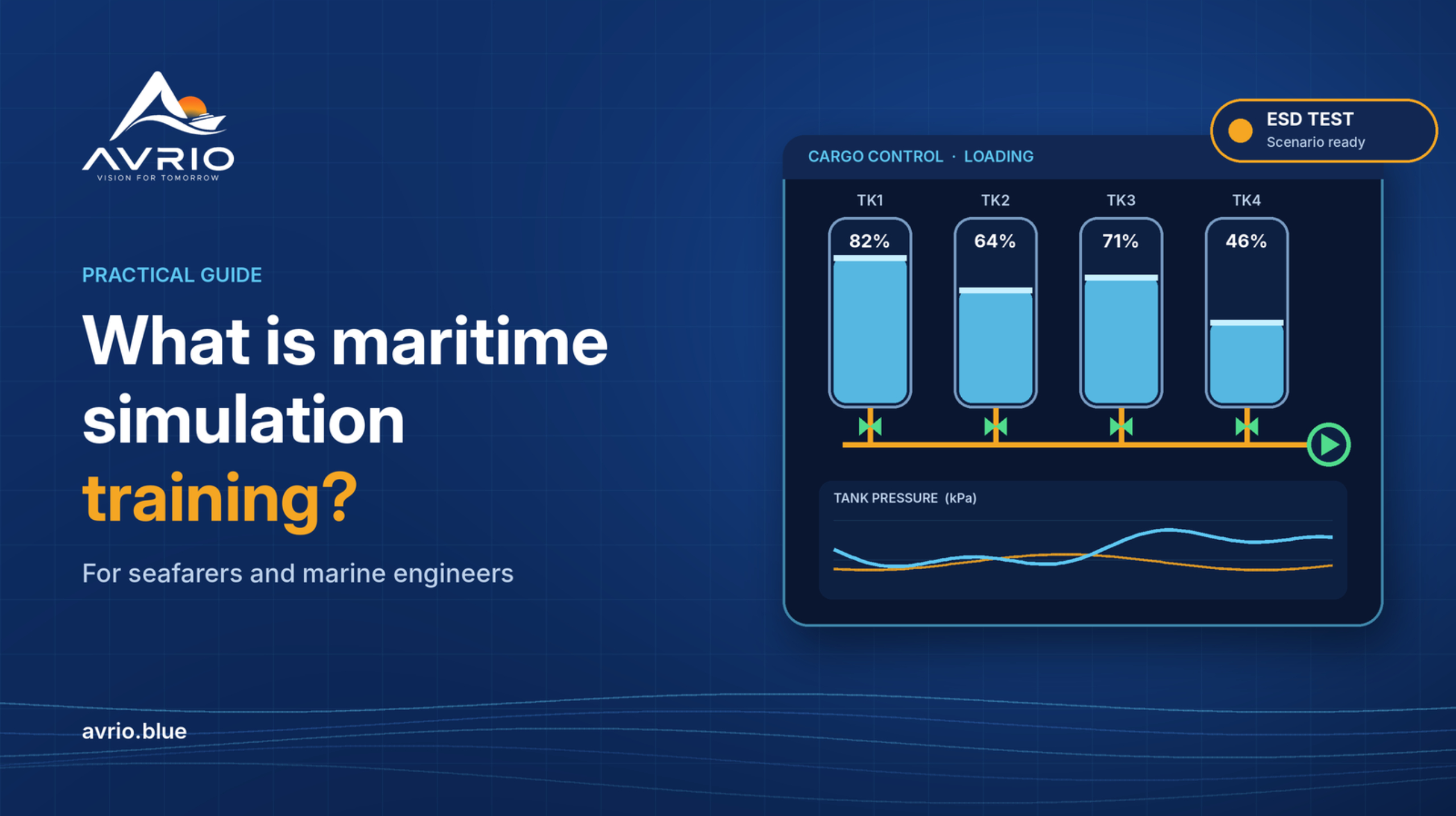
A simulator combines three things: mathematical models of the equipment, a control interface that looks like the real console, and live feedback such as trend graphs, gauges and alarms.
An LNG cargo simulator, for example, models the tanks, compressors, pumps, valves and ballast system, so trainees can plan line-ups and carry out cargo transfer step by step. An engine room simulator does the same for the main engine, auxiliaries and control systems.
Instructors can switch between normal, abnormal and emergency conditions. Trainees carry out their tasks, watch the plant respond and review their performance afterwards. That is how they learn the link between a decision and its consequence.
Picture an LNG carrier alongside a terminal, mid-transfer. The officers on duty need to understand the cargo system, the transfer procedure, the ballast plan and every valve line-up, and they need to get it right first time. Nobody can trigger an emergency shutdown on a working gas carrier just to practise.
The same is true in the engine room, where engineers need a feel for how machinery behaves under load and in a fault. A simulator is the one place where both can rehearse critical procedures and make mistakes that cost nothing.
That is why simulators are written into the rules. The STCW Convention (Regulation I/12) sets performance standards for using simulators in training and assessment, and IMO Model Course 1.36 defines what an LNG cargo and ballast handling simulator course should cover. In India, the Directorate General of Shipping has issued guidelines for the LNG Cargo and Ballast Water Handling Simulator Course (Management Level).
Classroom training and simulator training do different jobs, and the best programmes use both.
Neither replaces onboard experience. Competent officers come from theory, simulation and sea time working together.
There is also the question of access. Traditionally, simulator training meant travelling to an institute with a dedicated simulator room, for a fixed batch on fixed dates. Cloud-based simulators run the same exercises in a web browser. Seafarers can train from home, the office or on board, 24/7, at their own pace, with no travel or accommodation costs. Companies can train whole teams at once, wherever their crews are.
LNG carriers and gas-fuelled ships keep growing in number, and they need officers and engineers who already understand their systems. Simulator training helps you:
AVRIO runs cloud-based simulators for LNG cargo operations and marine engines. Its LNG cargo simulator and course are DNV certified.
The course includes online mentoring sessions with LNG subject matter experts, and companies get one consistent standard for every crew, campus and fleet.
Is online simulator training recognised? AVRIO’s LNG cargo handling simulator and its LNG-LCHS course both hold DNV certificates. Anyone can check them at trust.dnv.com using the certificate numbers n2016640-msk and n2058425-rah.
Do I need special hardware? No. The simulators run in a web browser on a laptop, tablet or phone with an internet connection.
Can a company or institute train a whole group? Yes. The platform supports multi-user training, with performance tracking for every trainee.
Book a demo and ask about our introductory offer: avrio.blue · lngsimulations@avrio.blue · +91 98451 98535