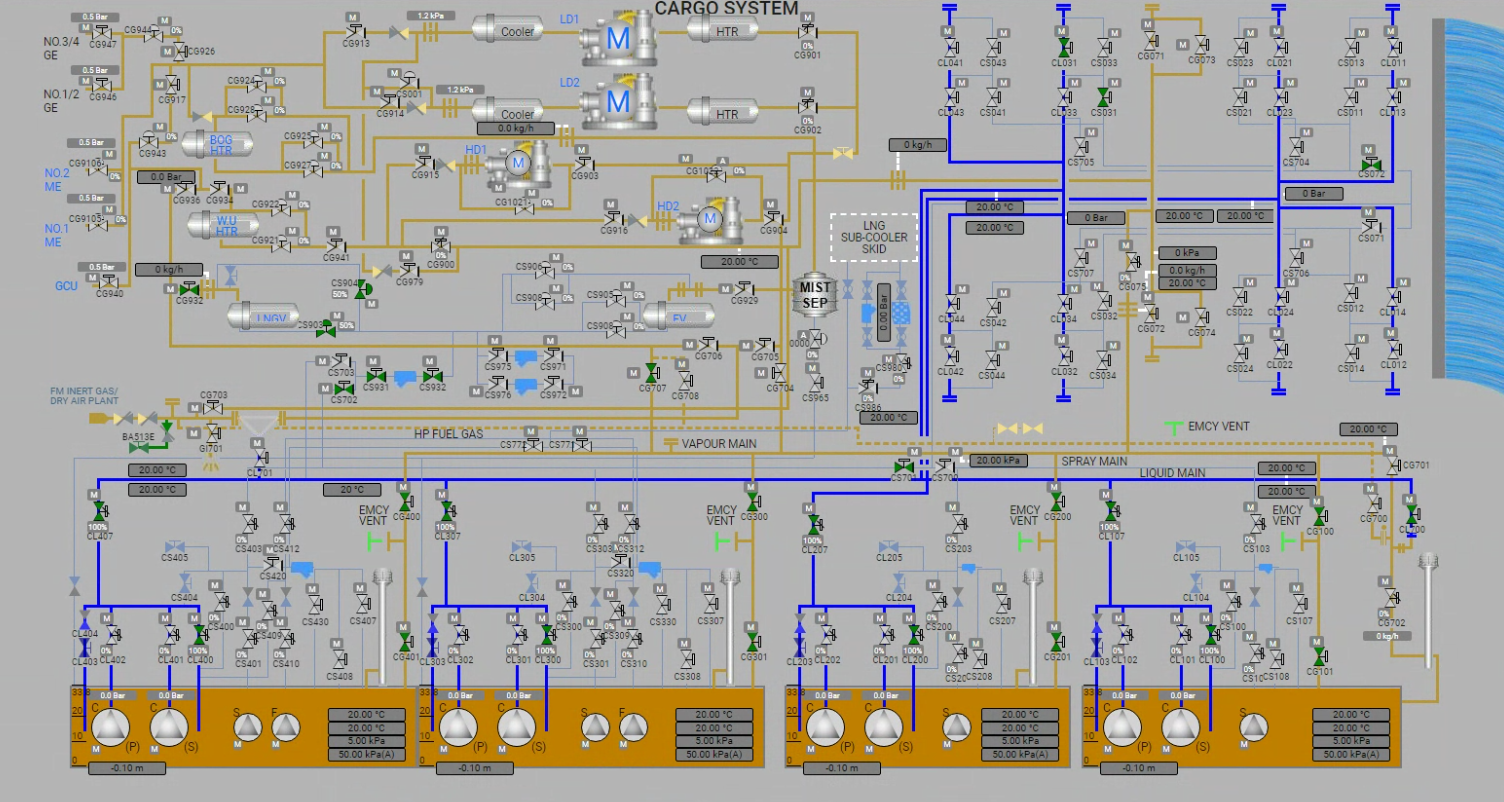
Function: Replacement of inert gas in cargo tanks with LNG vapour
The purpose of gassing-up cargo tanks is to remove the inert gas contained within the cargo tanks because inert gas contains approximately 15% carbon dioxide which will freeze at approximately -60°C and produce a white powder that can block valves, filters, and nozzles.
LNG liquid is supplied from the terminal to the liquid manifold where it passes to the spray line via an ESD liquid manifold valve to the vessel’s LNG vaporizer. It is then delivered as LNG vapor into the top of the cargo tanks via the vapor line and exits from the cargo tank via the filling lines. From here it can be vented to the atmosphere via the No.1 vent mast for step one of the process. Step two then follows with the LNG vapor being returned to the terminal using a high-duty (HD) compressor.
In some instances venting to the atmosphere is not permitted so options available include sending the vapor to the terminal, using the vapor as a gas fuel supply for the generator engines, or sending it for gas burning in the Gas Combustion Unit (GCU); or a combination of these choices.
It should be noted that the level of methane vented into the atmosphere is dependent upon the terminal regulations, which should be discussed and agreed upon before operations commence.
Performance criteria
Auxiliaries involved
Operation duration
Necessary device
Checkpoints
This exercise is carried out onboard an LNG carrier, where liquid LNG is provided by the shore and converted into vapor using onboard LNG vaporizer equipment. The LNG vapor is then introduced into the cargo tanks from the top, replacing the heavier inert gas present inside the tanks. The inert gas is extracted from the bottom of the tank and released into the atmosphere.
The exercise is divided into two main steps:
Setting up the correct configuration of emergency shutdown systems. Starting the manifold water curtain. Preparing gas measurement instruments for use. Preparing the LNG vaporizer. Opening the required valves and connecting the necessary hoses (or “spool pieces”).
The assessment begins when the actual flow of LNG starts from the shore. The user must ensure the following during the assessment: